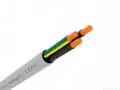
Flexible control cables are specialized cables designed for scenarios involving frequent bending, torsion, and movement. Their core advantage is high resistance to bending fatigue; some high-performance products offer a bending life exceeding 10 million cycles, ensuring stable transmission of control signals and power under dynamic operating conditions.
Key Characteristics
High Flexibility and Bending Resistance: Conductors consist of stranded ultra-fine oxygen-free copper wires (compliant with IEC 60228 Class 5/6 standards). Combined with a short-lay cabling process, the minimum dynamic bending radius can be as low as 3 to 7.5 times the cable's outer diameter, allowing the cable to withstand millions of reciprocating bends without core breakage.
Excellent Mechanical Properties: Outer jackets typically utilize wear-resistant elastomers such as PUR or TPE. These materials offer high tensile and torsional strength, withstanding continuous friction during drag chain operations; some products boast a service life exceeding 6 million bending cycles.
Strong Environmental Adaptability: Standard models operate within a temperature range of -40°C to +90°C, while custom versions can withstand temperatures as low as -60°C. They generally feature resistance to oil, acids, alkalis, hydrolysis, and UV radiation, making them suitable for complex industrial environments involving oil contamination or high humidity.
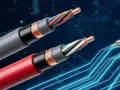
Stable Signal Transmission: Options include tinned copper wire braiding (≥80% coverage) or aluminum foil shielding to effectively resist electromagnetic interference in industrial settings, ensuring accurate and distortion-free control signal transmission.
Safe Flame-Retardant Properties: Compliant with the IEC 60332-1-2 flame-retardancy standard. Low-smoke, zero-halogen (LSZH) versions release virtually no toxic hydrogen halide gases during combustion and maintain a smoke density light transmittance of ≥60%, significantly enhancing safety for fire escapes in confined spaces.
Key Application Areas
Industrial Automation: Serving as core cables for cable carrier systems, they are widely used in CNC machine tools, industrial robots, spraying/welding robotic arms, and logistics conveyor lines, providing control signals and power connections for high-speed moving components.
High-end Equipment Manufacturing: Suitable for space-constrained applications requiring frequent movement—such as precision semiconductor assembly equipment, medical imaging systems (CT/MRI), and surgical robots—ensuring the stable transmission of high-precision control commands.
Transportation and Infrastructure: Deployed in automotive automated production lines, rail vehicle control circuits, port cranes, and automated terminal loading/unloading equipment, meeting the demands of long-term dynamic operations in outdoor environments.
Specialized Operating Conditions: For environments with rigorous waterproofing and weather-resistance requirements—such as underwater exploration equipment, mining machinery, and construction machinery—customized watertight flexible control cables enable stable, combined transmission of signals and power.