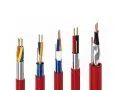
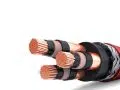
Industrial Control Cables: The "Nervous System" of Industrial Automation
In modern industrial automation systems, control cables serve as the central nervous
system—shouldering the critical tasks of signal transmission and command control.
From secondary circuit control in power plants to the precision operations of CNC
machine tools, and from automated monitoring in petrochemical facilities to signaling
systems in rail transport, the reliability of control cables directly impacts production
safety and efficiency. If cable quality is substandard, it can lead not only to signal
distortion and equipment malfunctions but also to severe consequences such as
production stoppages and safety accidents; therefore, mastering scientific methods
for assessing quality is of paramount importance.
The Core Value of Industrial Control Cables
The importance of control cables is reflected in their irreplaceable functional
characteristics. First is their precise signal transmission capability: they efficiently convey
low-voltage signals, enabling interconnectivity between devices and ensuring the stable
operation of automation systems. Second is their robust anti-interference performance:
through effective shielding structures, they resist electromagnetic interference, thereby
guaranteeing signal integrity within complex industrial environments. Furthermore,
control cables possess excellent environmental resistance; their insulation layers and
sheathing materials are designed to withstand harsh operating conditions—such as high
temperatures, oil contamination, and corrosion—providing a long-term, reliable guarantee
for signal transmission in industrial production.
Visual Inspection: Quality Revealed in the Details
Assessing the quality of industrial control cables can begin with a close examination of
their physical appearance. For compliant products, the outer packaging should be intact
and undamaged, with clear and standardized printing that displays key information such
as the product name, model specifications, rated voltage, length, and manufacturer. It
should also be accompanied by a product conformity certificate and a third-party
inspection report. The conductor is the core of the cable; high-quality copper conductors
exhibit a reddish-purple hue with a uniform surface luster, free from defects such as
oxidation, blackening, or spots. Their cross-sectional dimensions should match the
nominal values, and they should demonstrate good ductility—resisting breakage—
when bent. The insulation and sheathing layers should be smooth, round, and of uniform
thickness, free from blemishes such as lumps or bubbles. Their aging resistance can be
evaluated through a bending test: after being bent around a cylindrical mandrel five times,
the material should not exhibit any whitening or cracking.
Performance Testing: Verifying Reliability Through Data
Performance testing constitutes the critical final stage in assessing cable quality.
Regarding electrical performance, testing must cover DC resistance, insulation
resistance, and dielectric strength to ensure optimal conductivity of the conductor
and to verify that the insulation layer poses no risk of leakage. Mechanical performance
testing includes tensile strength and flex-life tests; compliant cables must be capable
of withstanding specified tensile forces, and neither the insulation nor the conductor
should sustain damage after repeated bending cycles. For specialized operating
environments, additional environmental adaptability tests—such as high-temperature
aging, moisture resistance, and corrosion resistance—are required to guarantee that the
cables maintain stable operation even under harsh working conditions.